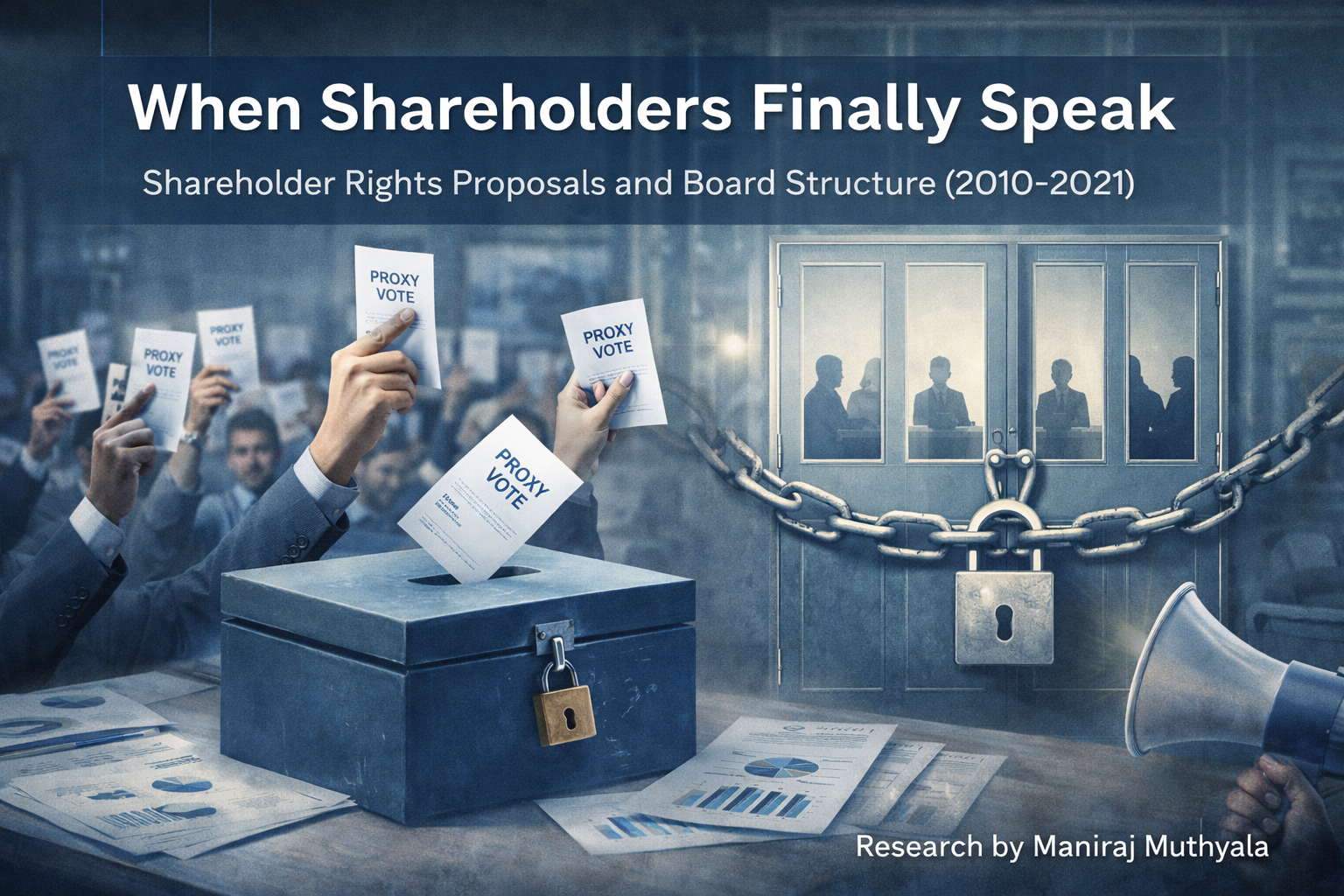
𝗪𝗵𝗲𝗻 𝗦𝗵𝗮𝗿𝗲𝗵𝗼𝗹𝗱𝗲𝗿𝘀 𝗙𝗶𝗻𝗮𝗹𝗹𝘆 𝗦𝗽𝗲𝗮𝗸
I spend a lot of time thinking about 𝗽𝗼𝘄𝗲𝗿. Not the loud kind. The quiet kind. The kind that sits behind a polished boardroom table and decides 𝗵𝗼𝘄 𝗵𝗮𝗿𝗱 𝗶𝘁 𝗶𝘀 𝗳𝗼𝗿 𝗼𝘄𝗻𝗲𝗿𝘀 𝘁𝗼 𝗯𝗲 𝗵𝗲𝗮𝗿𝗱.
That is why I built my job market paper, 𝗦𝗵𝗮𝗿𝗲𝗵𝗼𝗹𝗱𝗲𝗿 𝗥𝗶𝗴𝗵𝘁𝘀 𝗣𝗿𝗼𝗽𝗼𝘀𝗮𝗹𝘀 𝗮𝗻𝗱 𝗕𝗼𝗮𝗿𝗱 𝗦𝘁𝗿𝘂𝗰𝘁𝘂𝗿𝗲.
I went into the data because I kept asking one simple question:
𝗪𝗵𝗲𝗻 𝗮 𝗯𝗼𝗮𝗿𝗱 𝗶𝘀 𝗵𝗮𝗿𝗱𝗲𝗿 𝘁𝗼 𝗿𝗲𝗽𝗹𝗮𝗰𝗲, 𝗱𝗼 𝘀𝗵𝗮𝗿𝗲𝗵𝗼𝗹𝗱𝗲𝗿𝘀 𝗽𝘂𝘀𝗵 𝗯𝗮𝗰𝗸 𝗵𝗮𝗿𝗱𝗲𝗿 𝘁𝗼𝗼?
So I read thousands of proposals and proxy statements, and tracked 𝗵𝗼𝘄 𝗶𝗻𝘃𝗲𝘀𝘁𝗼𝗿𝘀 𝘃𝗼𝘁𝗲𝗱.
What I found felt like a human story hidden inside numbers:
• 𝗪𝗵𝗲𝗻 𝗯𝗼𝗮𝗿𝗱𝘀 𝗮𝗿𝗲 𝗰𝗹𝗮𝘀𝘀𝗶𝗳𝗶𝗲𝗱 (𝘀𝘁𝗮𝗴𝗴𝗲𝗿𝗲𝗱), 𝘀𝗵𝗮𝗿𝗲𝗵𝗼𝗹𝗱𝗲𝗿𝘀 𝗱𝗼 𝗻𝗼𝘁 𝗴𝗼 𝗾𝘂𝗶𝗲𝘁.
• 𝗪𝗵𝗲𝗻 𝘁𝗵𝗲 𝗽𝗿𝗼𝗽𝗼𝘀𝗮𝗹 𝗶𝘀 𝗮𝗯𝗼𝘂𝘁 𝘀𝗵𝗮𝗿𝗲𝗵𝗼𝗹𝗱𝗲𝗿 𝗿𝗶𝗴𝗵𝘁𝘀, 𝘁𝗵𝗲 𝗽𝘂𝘀𝗵 𝗯𝗮𝗰𝗸 𝗴𝗲𝘁𝘀 𝗲𝘃𝗲𝗻 𝗹𝗼𝘂𝗱𝗲𝗿.
• 𝗦𝘂𝗽𝗽𝗼𝗿𝘁 𝗮𝗹𝘀𝗼 𝗱𝗲𝗽𝗲𝗻𝗱𝘀 𝗼𝗻 𝘄𝗵𝗼 𝘀𝗽𝗲𝗮𝗸𝘀 𝗮𝗻𝗱 𝗵𝗼𝘄 𝘁𝗵𝗲𝘆 𝘀𝗽𝗲𝗮𝗸.
At the end, my takeaway is simple:
𝗦𝗵𝗮𝗿𝗲𝗵𝗼𝗹𝗱𝗲𝗿𝘀 𝘃𝗼𝘁𝗲 𝘀𝘁𝗿𝗮𝘁𝗲𝗴𝗶𝗰𝗮𝗹𝗹𝘆. 𝗪𝗵𝗲𝗻 𝗴𝗼𝘃𝗲𝗿𝗻𝗮𝗻𝗰𝗲 𝗶𝘀 𝗲𝗻𝘁𝗿𝗲𝗻𝗰𝗵𝗲𝗱, 𝘁𝗵𝗲𝘆 𝗰𝗼𝗻𝗰𝗲𝗻𝘁𝗿𝗮𝘁𝗲 𝘁𝗵𝗲𝗶𝗿 𝘃𝗼𝗶𝗰𝗲 𝗼𝗻 𝗿𝗶𝗴𝗵𝘁𝘀 𝘁𝗵𝗮𝘁 𝗿𝗲𝗼𝗽𝗲𝗻 𝘁𝗵𝗲 𝗱𝗼𝗼𝗿.
I am on the academic job market and excited to talk with schools looking for someone who teaches and researches 𝗰𝗼𝗿𝗽𝗼𝗿𝗮𝘁𝗲 𝗴𝗼𝘃𝗲𝗿𝗻𝗮𝗻𝗰𝗲, 𝘀𝗵𝗮𝗿𝗲𝗵𝗼𝗹𝗱𝗲𝗿 𝗮𝗰𝘁𝗶𝘃𝗶𝘀𝗺, 𝗮𝗻𝗱 𝗵𝗼𝘄 𝗶𝗻𝘀𝘁𝗶𝘁𝘂𝘁𝗶𝗼𝗻𝘀 𝘀𝗵𝗮𝗽𝗲 𝗿𝗲𝗮𝗹 𝘄𝗼𝗿𝗹𝗱 𝗱𝗲𝗰𝗶𝘀𝗶𝗼𝗻 𝗺𝗮𝗸𝗶𝗻𝗴.
If your department values 𝗿𝗶𝗴𝗼𝗿𝗼𝘂𝘀 𝗲𝗺𝗽𝗶𝗿𝗶𝗰𝗮𝗹 𝘄𝗼𝗿𝗸 𝘄𝗶𝘁𝗵 𝗿𝗲𝗮𝗹 𝘄𝗼𝗿𝗹𝗱 𝗿𝗲𝗹𝗲𝘃𝗮𝗻𝗰𝗲, I would love to connect.
Research Statement
With a background in finance and a strong foundation in applied mathematics, my research explores the intersection of corporate finance, corporate governance, and shareholder activism. I focus on integrating data-driven methods - particularly natural language processing and econometric modeling - to analyze corporate disclosures and understand governance mechanisms. By combining rigorous empirical analysis with practical relevance, my goal is to contribute research that informs both academic thought and financial industry practice. Current working papers include:
Boardroom Observers: White Knight or Trojan Horse?
With Dr. Choonsik LeeInvestigates the impact of activist-appointed board observers on firm performance, strategic decisions, and market reactions. Accepted for presentation at the 2025 Financial Management Association (FMA) Annual Meeting.
Who Wins the Boardroom Battle? Voices of Shareholders vs. Management
Uses textual analysis of proxy statement disclosures (from SEC EDGAR filings) to examine how tone, sentiment, and persuasive language influence the voting outcomes of shareholder proposals.
Shareholder Rights Proposals and Staggered Boards
Analyzes how staggered board structures affect support for shareholder proposals, using empirical data from Compustat and governance databases to highlight the influence of various corporate governance mechanisms.